

By Sofie Boets and Tor-Olav Nævestad After establishing a common definition of Traffic Safety Culture (TSC), one of the next tasks in the TRUST project was to make an inventory of current interventions and good practices applying a cultural approach to road safety, and to derive success factors and barriers. To explore this at community and organisational level, we consulted experts and reviewed research and practical examples from road safety and other safety critical transport domains and sectors. The review of community-level TSC interventions indicates that this is an emerging field with an evidence base that is still scarce and fragmented. Few interventions explicitly label themselves as „cultural” and the identified studies vary considerably in target groups, intervention strategies, theoretical approaches, and evaluation designs. This highlights the importance of TRUST to streamline the concept of TSC interventions and to provide guidance on effective ways to build, implement and evaluate them. The proposed fine-tuned concept is that TSC interventions aim at changing, in a relatively short time period, shared ways of thinking/feeling about traffic safety (shared values, norms, beliefs and/or attitudes) that are known to sustainably influence intentional behaviour among members of a bonded group of actors in the road transport system. This differs from interventions directly controlling behaviour (e.g. enforcement, infrastructure, technology), which may also lead to shared mindset changes but rather as an after-effect and indirectly. Common principles are consideration of the underlying social and cultural motives for intentional behaviour, focus on the most salient motives and use of tailored strategies. Recommended mechanisms include changes in shared beliefs “about the social environment”, positive framing and group identification, shared responsibility, and reinforcement through the wider social environment. A structured stepwise frame of success factors was developed. The evidence base for organisational safety culture (OSC) interventions is considerably more mature, probably because the target group is more well-defined. OSC interventions may influence culture directly through leadership, communication, participation and group interaction, but also indirectly through formal organisational measures such as policies, monitoring, feedback, risk assessments and more comprehensive safety-management systems. Important mechanisms include management signalling and cultural embedding, collective sensemaking and social influence, organisational learning, and institutionalisation through repeated safety-management practices. Successful interventions generally depend on strong management commitment, employee involvement, trust, motivation for change, coherent implementation and sustained organisational attention. The Safety Ladder for safety management (Nævestad et al 2018) illustrates how several of these mechanisms can be combined in a stepwise approach to organisational road-safety management. More details can be found in TRUST deliverable 2.2c. photo credit: Ralf Geithe
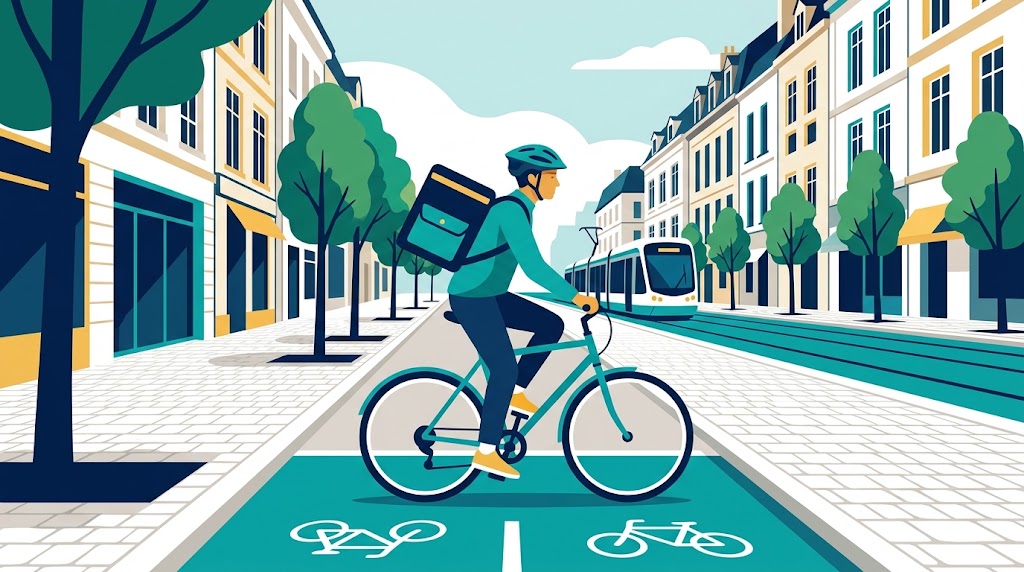
Making food deliveries safer, together
by Mathias De Roeck When we order a meal, we rarely think about the journey to our door. For couriers, that journey is part of their working day. They travel through busy streets by bicycle, e-bike, moped, motorcycle or car, often while managing the demands of delivery work (such as dealing with time pressure, finding addresses, receiving delivery updates). Keeping couriers safe involves more than asking them to follow traffic rules. The way companies organise deliveries, communicate with couriers and respond to safety concerns can also shape what happens on the road. Through TRUST, Vias institute in Belgium, the Institute of Transport Economics (TØI) in Norway and the Swedish National Road and Transport Research Institute (VTI) are working with food delivery companies to explore how a positive traffic safety culture can become a stronger part of everyday work. The companies involved are Just Eat Takeaway.com (JET) in Belgium and foodora in Sweden. There may also be opportunities to involve other countries as the pilot develops. The first step is to learn how companies currently approach traffic safety culture and what challenges they face. Discussions with company staff and a short questionnaire will help us develop activities that fit the realities of delivery work. One option being explored is an online teaching session on traffic safety culture for managers based on the Safety Ladder approach, combined with short learning activities that couriers can complete at a convenient time. The Safety Ladder helps transport companies improve traffic safety culture step by step. It starts with managers making safety a clear priority and builds towards more systematic ways of identifying risks and managing safety. The format will be shaped with the companies involved. We will ask participants about their views on the importance of traffic safety culture before and after the activities to understand what they found useful and whether their thinking about traffic safety culture has changed. The lessons could help food delivery companies across Europe find practical ways to make safer journeys part of their daily work.

How can municipalities, cities and regional authorities strengthen their Traffic Safety Culture? Free online-training for municipalities and regional authorities
by Veronika Zuser and Tor-Olav Nævestad Traffic safety is shaped by decisions made across an organisation, not only by those working directly in transport, mobility or road safety. Recognising this, the TRUST partners TØI (NO) and Lund University (SE) have developed a free online training programme to help representatives of local and regional authorities better understand their role in creating safer and more sustainable mobility systems. Representatives from all European countries are welcome to join and register for the training which will take place on 11 & 18 November 2026. The training programme is designed for managers, political leaders and staff working in areas such as regional and urban planning, building and land-use permits, traffic planning and management, mobility and transport, procurement, human resources, education and related fields. Combining research-based insights with practical examples, it focuses on how organisations can take a more systematic approach to improving traffic safety culture. The main purpose of the training is to raise awareness of an organisation’s impact on traffic safety from a sustainability perspective, and of the role that course participants can play in their professional capacities. Participants will explore how different departments and functions influence traffic safety, identify opportunities for collaboration across their organisation, and learn how to embed safety into everyday decision-making processes and work more systematically with traffic safety. The programme also highlights the connection between traffic safety and broader sustainability goals. The training consists of two short online sessions (three hours each), complemented by reflection activities and a short survey before and after the programme. Participation is free of charge. Participants who complete the programme will receive a certificate of completion. If you are interested, you can find more information here and register via this link: https://svar.toi.no/cvsxGH Join us to find out how fostering a stronger traffic safety culture can help to create safer communities and promote more sustainable mobility for everyone. Photo credit: vitomirov
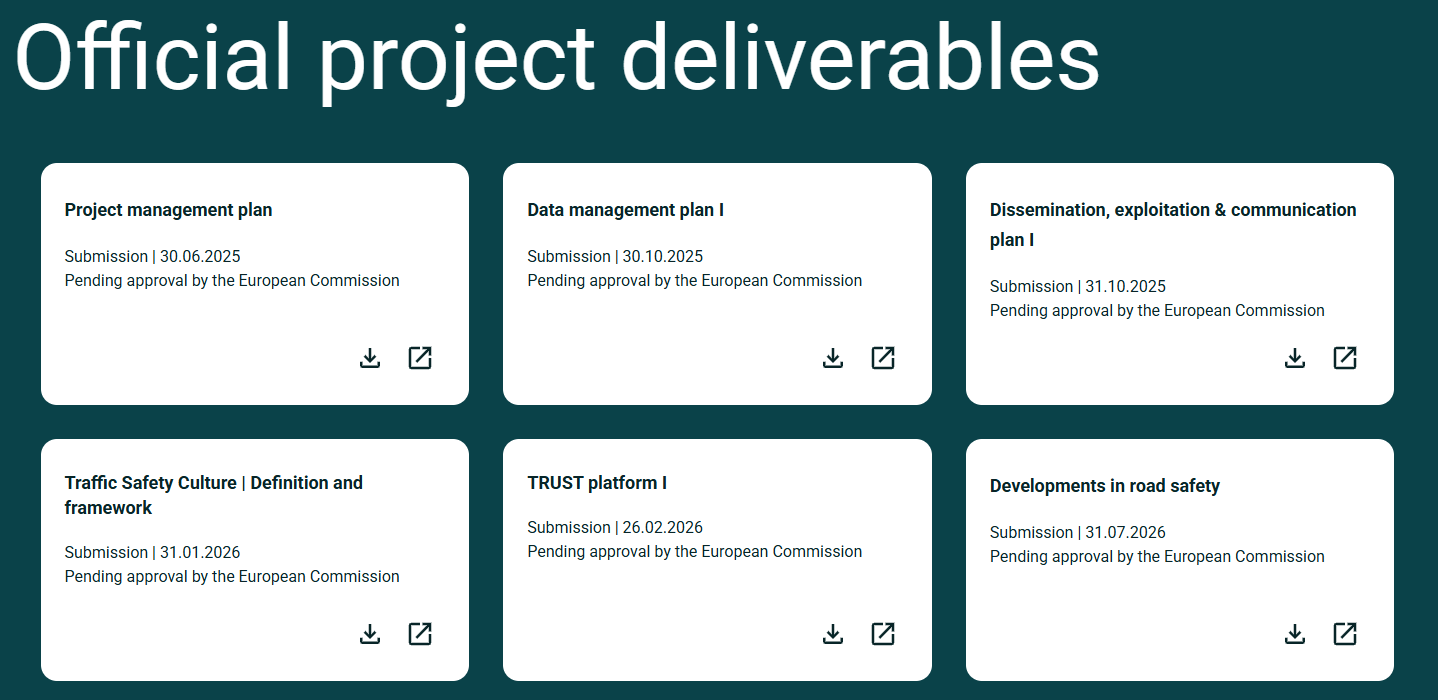
Project deliverables (reports) available on our website
You can keep up to date on the progress of the TRUST project by taking a look at our project deliverables (reports) which describe in detail all the work that we have done. We recently put all our projects deliverables that have been sent to the European Commission so far, on our website. They are still all awaiting final approval by the European Commission but you can read them here:
TRUST events and publications – October 2026 update
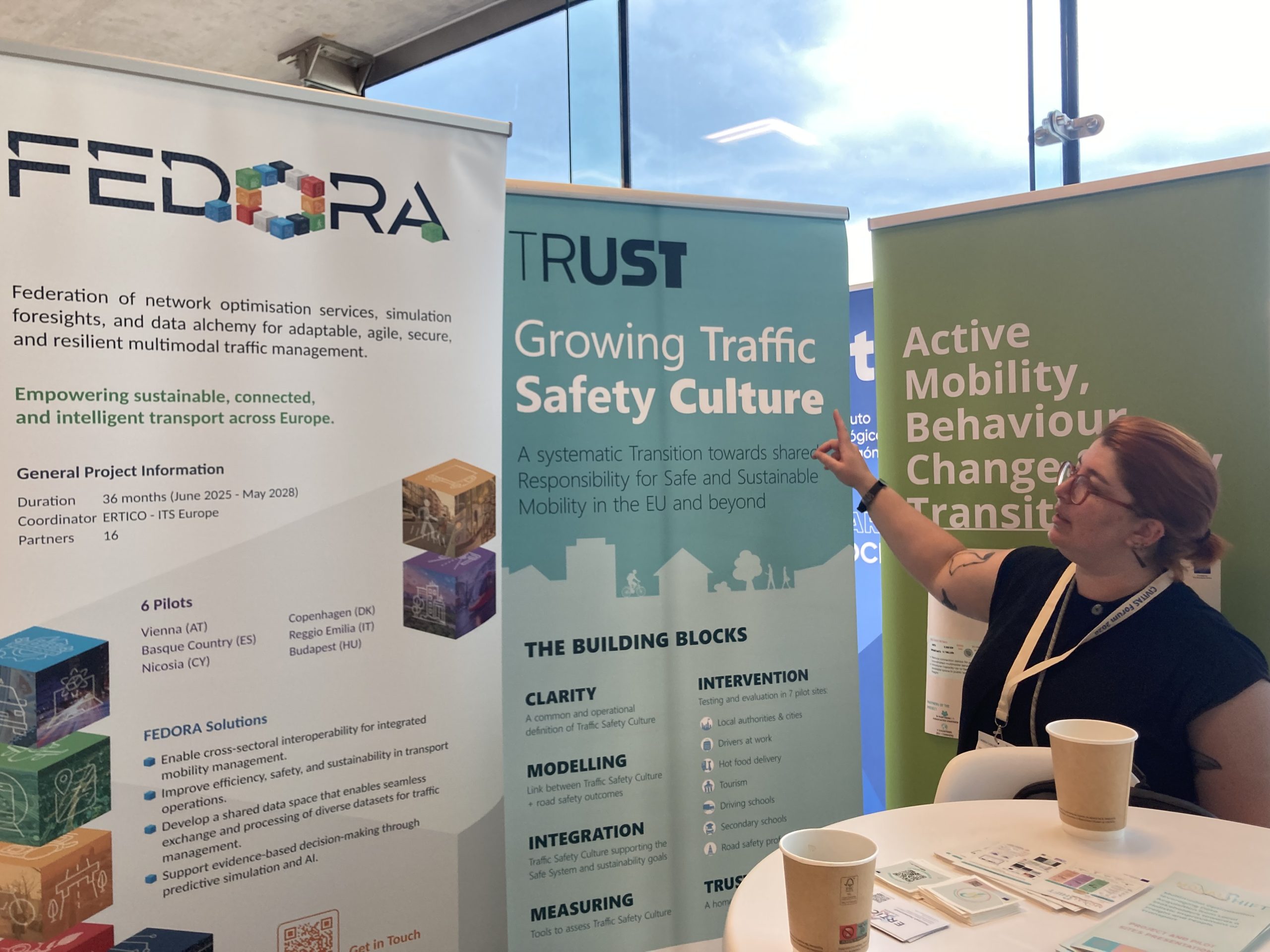
TRUST partners continue to disseminate the work they are doing within the TRUST project at conferences, external events and in publications. TRUST at the Civitas forum with TRUST Pilot 1 – Municipalities and regional authoritiesTRUST was at the Civitas Forum held in Thessaloniki in September. It was a great opportunity not only to present our project in general, but also to disseminate details of the training course developed and run under our Pilot 1. This training course is for municipalities and regional authorities wanting to strengthen the traffic safety culture of their organisation. The TRUST training course will be held online and starts on 11 November (EN version). To register and find more check out our website here: https://lnkd.in/e6TVAEAG Publications using TRUST results that have been published or are awaiting publication: Partner/Lead Author Title Journal/conference Date Nævestad, T.-O., Meesmann, U., Wallén Warner, H., Kaiser, S., Milch, V., De Roeck, M., Schachner, M., Nikolaou,D., Björklund, G., Laiou, A., Storesund Hesjevoll, I., Forward, S., Wennberg, H., Aigner-Breuss, E., & Eichhorn, A. Traffic safety culture within the Safe System: Developing a common definition of traffic safety culture. Frontiers in Sustainable Cities. 15 July 2026 Nikolaou D., Laiou A., Sekadakis M., Kyprouli D., Yannis G. A Systematic Review of Traffic Safety Culture in Relation to New Mobility Modes, Technology and Policy Developments Safety 16 October 2026 Uta Meesmann, Dimitrios Nikolaou, Carlos Pires, Tor-Olav Nævestad, Alena Katharina Høye, Susanne Kaiser, George Yannis Link between traffic safety culture and road safety performance across 22 European countries IATSS Research Under review


